Stereolitography (SLA):

    fast 3D printing
    for visual prototypes
    and form checks

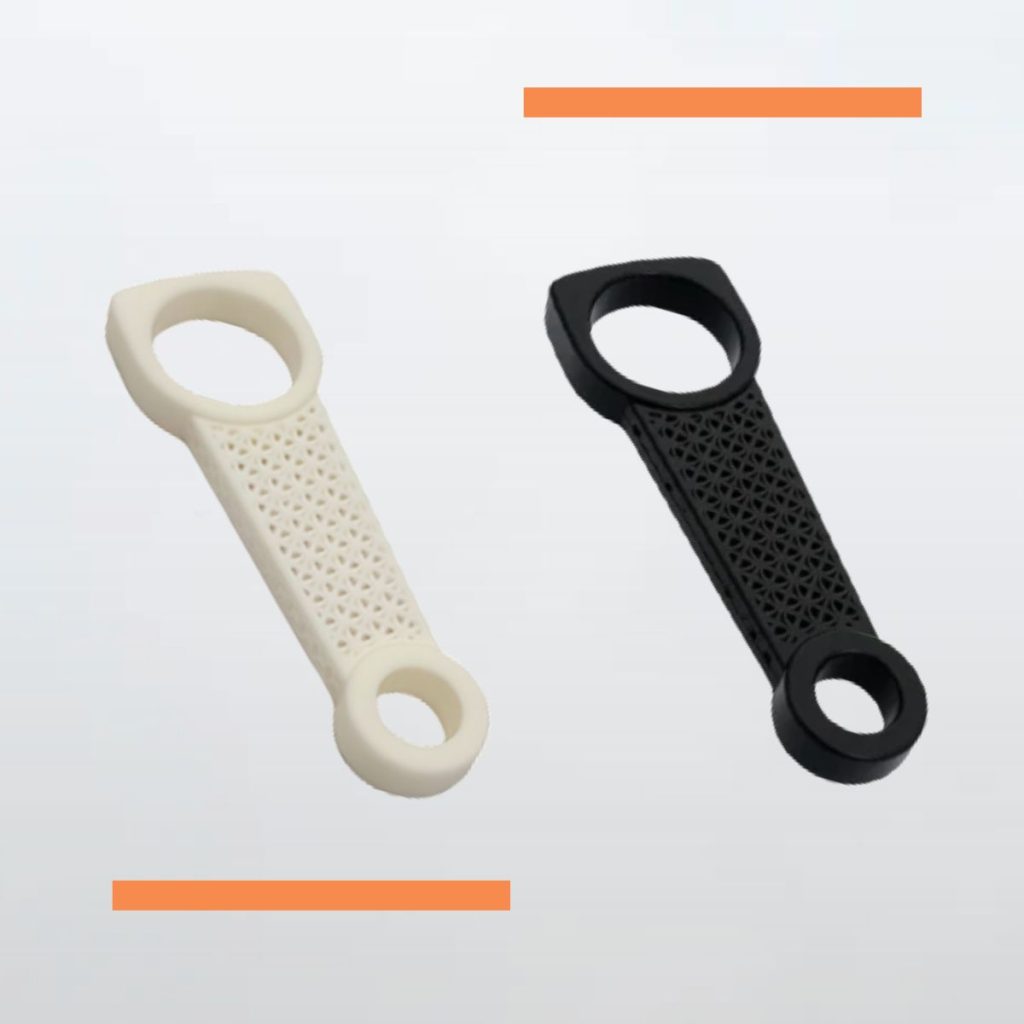
    Stereolithography (SLA) is an additive manufacturing technology that uses a laser to selectively cure liquid photosensitive resin, layer by layer.

    The result is a part with a smooth surface and accurate geometric detail, produced quickly.

    At D-REAM it comes in white or black resin, and it is the right choice when the priority is validating form and appearance rather than mechanical strength.

    sla demo image

    Why choose SLA
    for rapid prototyping

    • Speed. Short print times let you iterate through several versions of the same design.
    • Smooth surface. An even finish straight off the printer, suitable for most prototypes.
    • Detail. High resolution for complex shapes and fine features.
    • Lower cost. An economical way to validate form and concept.

    How SLA 3D printing
    works

    The process repeats for every layer of the part:

    1. Preparation. The 3D model is oriented and sliced into thin layers; support structures are added where needed.
    2. Tracing. A UV laser sweeps across the surface of the liquid resin and solidifies it, following the cross-section of the layer.
    3. Building. The platform moves, a fresh layer of resin flows over the part and the laser traces the next layer, until the part is complete.
    4. Washing. The part is removed and washed to clear away uncured resin.
    5. Post-curing and finishing. The part is cured under UV light to reach its final properties and the supports are removed.

    The laser’s resolution and the thin layers are what give SLA its smooth surface and fine detail.

    What to bear in mind when designing for SLA

    As a guide, minimum unsupported wall thickness is 0.6 mm, the minimum through-hole diameter 0.5 mm and the minimum engraved feature size is 0.4 mm.

    These are design values; feasibility depends on geometry and functional requirements. All values are in the [design guidelines]. Maximum part size is still to be confirmed.

    Stereolitography (SLA) is the right choice for checking form, fit and appearance, not for carrying loads: the white and black resins are designed for prototypes, not for parts under high mechanical stress.

    Avoid very thin walls and deep undercuts, which raise the risk of distortion and support marks. Parts come off the printer with a smooth, even surface. If the geometry has critical features, you can ask Prototek for a technical review.

    typical applications for SLA

    Stereolitography (SLA) makes visual prototypes and presentation models, form and clearance checks, assembly and fit checks, light jigs and fixtures, and visible prototypes in black resin.

    It is the quickest and most economical technology for iterating through several versions of a design before moving to HP MJF or DLP.

    When to move to
    HP MJF or DLP

    • Use SLA for form checks, fit, assembly checks and visual prototypes.
    • Move to HP MJF when the part has to carry mechanical loads, flex or run in small batches, or when you need specific surface finishes.
    • Choose DLP with IND405 resin when you need a rigid, impact-resistant resin and clear part.

    Resins available in SLA

    Stereolithography (SLA) at D-REAM uses a rigid, single-component photosensitive resin in two variants, with the same surface finish and the same print speed:

    • White SLA resin: for visual prototypes, form checks, jigs and assembly checks.
    • Black SLA resin: for prototypes with an appearance closer to the finished product.

    FAQ

    Answers to frequently asked questions about quotes, materials, technologies, and lead times for industrial 3D printing.

      CONTAct us

      For a quote, the fastest option is our online quoting tool: upload your file and get an immediate estimate of costs and lead times. For any other information about materials, technologies, production timelines, or order management, our team is here to help.