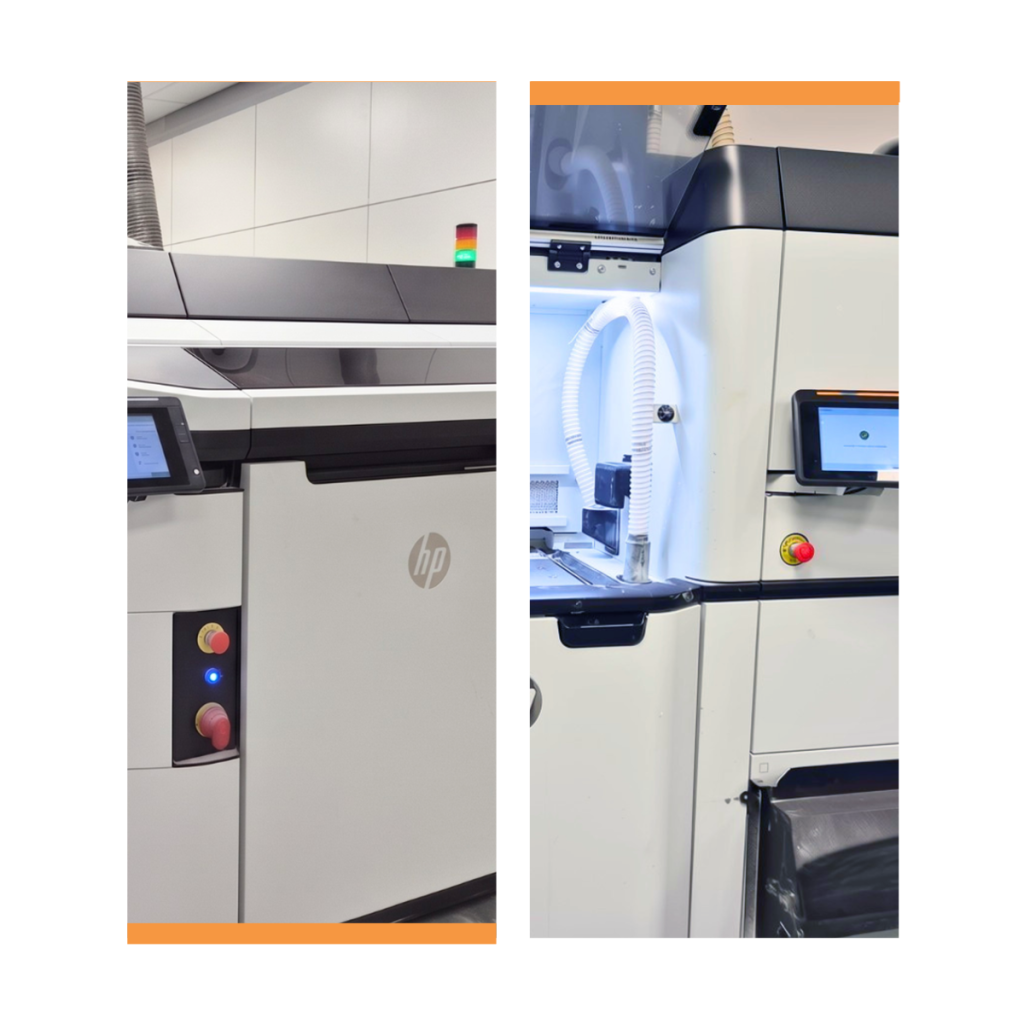
Hp MJF (multi jet fusion):

    industrial 3D printing
    for functional parts
    and small batches

    HP MJF (Multi Jet Fusion) is a powder-bed additive manufacturing technology developed by HP.

    High-precision print heads deposit a fusing agent onto a bed of powder, layer by layer; thermal energy then fuses the treated areas, building the part in successive passes.

    At D-REAM it is the technology for PA12, PA12 GB and TPU: dense parts with more uniform properties and no support structures.

    Why choose HP MJF
    for industrial components

    •  Dense parts, more uniform properties. Compared with many extrusion technologies, MJF produces parts with more consistent mechanical properties in every direction. Results depend on geometry, orientation, material and finish.
    • Fine detail. Thin layers and a multi-agent process allow thin walls, small holes and well-defined features (see the design guidelines).
    • Repeatability. Constant process parameters give comparable results from batch to batch.
    • No supports. Unfused powder supports the part during printing, so no dedicated support structures are needed.
    • From prototype to production without tooling. The same process runs from a single part to small and medium batches.

    How HP MJF printing works

    The process repeats for every layer of the part:

    1. Powder is spread. A thin layer of polyamide powder is spread across the build platform and heated.
    2. Agents are deposited. The print heads apply a fusing agent where the material has to solidify and a detailing agent along the edges, for sharper contours.
    3. The layer is fused. A source of thermal energy passes over the layer and fuses the treated areas; untreated powder stays loose.
    4. The cycle repeats. The platform lowers, a new layer is spread and the process continues until the part is complete.
    5. Cooling and cleaning. The block of powder with the parts inside it cools down; the parts are then removed and cleared of excess powder, typically by bead blasting, which is also the basis of the finishes.

    Because the powder supports the parts, several components, even different ones, can be printed together in the same cycle: this is one of the reasons the process suits small batches.

    What to bear in mind when designing for HP MJF

    The surface that comes off the printer is grey, matte and slightly grainy: for a different look and feel, choose one of the finishes. If a part is hollow or has internal channels, the unfused powder must be able to get out: include openings and, in lattice structures, a gap of at least 5 mm.

    As a guide, minimum wall thickness is 1 mm and dimensional accuracy is ±0.5 mm up to 100 mm and 1% above. All values are in the HP MJF design guidelines.

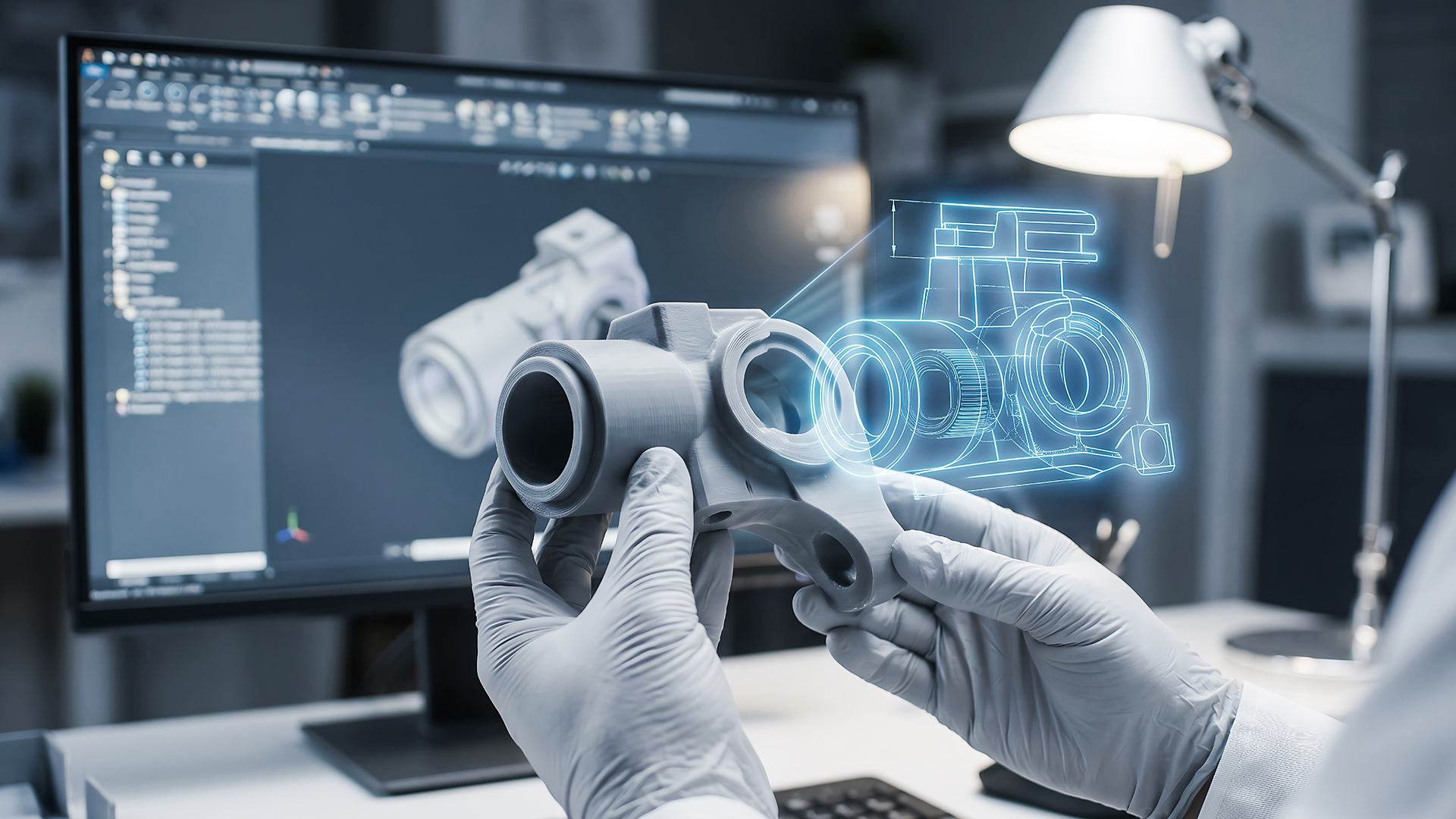
    Typical applications for HP MJF

    HP MJF makes:

    • electronics housings, connectors, gears and structural brackets in PA12 and PA12 GB;
    • jigs, fixtures and production tooling; flexible parts such as seals and guards in TPU;
    • functional prototypes to test in real conditions;
    • and repeatable small batches, as an alternative to injection moulding when volumes do not justify a mould.

    When to choose HP MJF (and when not to)

    • Choose HP MJF for functional prototypes you will test, production fixtures and jigs, technical components, flexible TPU parts and repeatable small batches.
    • If you mainly need to check form and appearance quickly and cheaply, with no mechanical load, stereolithography (SLA) is the better fit.
    • For rigid, impact-resistant or clear resin parts, consider DLP with IND405 resin.

    Materials available in HP MJF

    • PA12 Nylon: versatile, for technical parts and small batches.
    • PA12 GB glass-beads: for stiffness and dimensional stability.
    • TPU: for flexible, abrasion-resistant parts.

    From print to finish

    The technology defines geometry and mechanical performance; the finish defines appearance and some functional properties, such as roughness, wear resistance and colour. HP MJF parts can be treated with five finishes, from natural grey to vapour smoothing.

    FAQ

    Answers to frequently asked questions about quotes, materials, technologies, and lead times for industrial 3D printing.

      CONTAct us

      For a quote, the fastest option is our online quoting tool: upload your file and get an immediate estimate of costs and lead times. For any other information about materials, technologies, production timelines, or order management, our team is here to help.